
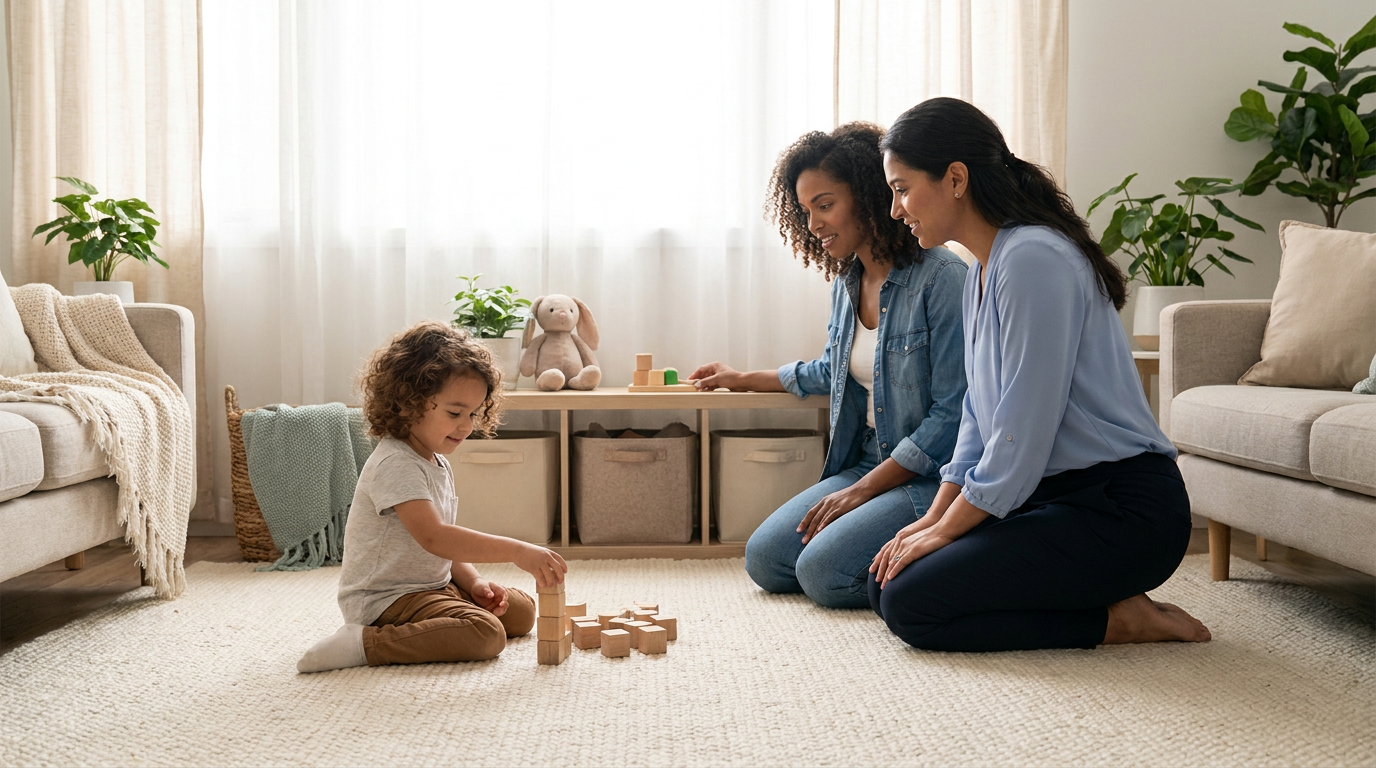
Saying yes to in-home ABA therapy can feel hopeful and a little exposing at the same time. Many families want to support their child without making home feel clinical or overly managed. The good news is that you do not need a perfect setup. You need a calm starting point, a few practical adjustments, and room to figure things out together.
Quick-Start Home Readiness Checklist
If you want a broader overview first, this guide to in-home ABA therapy for families is a helpful place to start.
Before the first visit
- Choose one workable space where sessions can usually begin.
- Notice obvious distractions like loud background noise, harsh lighting, or cluttered walkways.
- Put away anything unsafe or too tempting to pull focus.
- Confirm parking, entry details, and who will greet the therapist.
Keep nearby
- Preferred toys or comfort items
- Communication supports your child already uses
- Water, snacks, or routine items if they help
- One or two questions or updates for the care team
Think about household flow
- Where siblings will be during the session
- Whether pets need their own space for a bit
- How screens, visitors, and deliveries might interrupt the hour
- Whether the session time fits around naps, school, or after-school fatigue
Revisit after the first week
- Is the space still the best fit?
- Does your child need more privacy, movement, or transition time?
- What should you and the therapist adjust together?
Why a Calm Start Matters More Than a Perfect House
Preparing for in-home ABA therapy is really about lowering stress. When the space feels predictable and respectful, your child has more room to settle in, connect, and practice skills in a familiar place. That does not mean your home needs to be spotless, silent, or tightly controlled.
Many parents worry they will be judged, or that therapy will make everyday life feel too clinical. A strong in-home experience should work with real family life, not against it. If you want a fuller picture of how early visits often unfold, this article on what to expect during your child’s first ABA therapy sessions is a helpful next read.
The EASE Into In-Home ABA Framework
Evaluate the real space
Pick one area that feels workable, not perfect. In some homes, that is a playroom. In others, it is one corner of the living room or the kitchen table. For younger children, safety and easy access to play matter most. For older children and teens, privacy and ownership of space may matter more.
Anchor comfort and regulation
Keep a few familiar items within reach. A favorite toy, a visual support, or a predictable transition can make the start of a session feel less abrupt. The goal is not to force participation. It is to help your child feel safe enough to engage at their own pace.
Sync therapy with family rhythms
Try to place sessions where they fit your household as naturally as possible. Naps, school transitions, sibling routines, and pet energy all matter. Sometimes a small timing change makes a big difference. This guide on fitting home-based ABA into daily routines can help you think through that fit.
Explain roles and expectations early
You do not need to run the session. Parents are often most helpful when they share updates, ask questions, and let the therapist know what is or is not working at home. If you want a closer look at that partnership, this resource on working with therapists during home-based ABA sessions is a good next step.
Before the First Session: What to Set Up and What to Leave Alone
Start simple. A low-distraction space is helpful, but most families do not need a dedicated therapy room. Move anything fragile or unsafe if needed, and keep comfort items, simple seating, and communication tools close by. Most therapists bring core materials with them.
What matters just as much is the context you share. Let the care team know about recent sleep changes, tough transitions, favorite activities, or anything that has been helping lately. If you want an easy way to organize those details, the First ABA Assessment Guide can help.
What to Expect in the First Week
The first week is usually more about connection than immediate progress. Your child is getting to know a new person. The therapist is learning your routines, your home, and the small things that make sessions easier or harder. If the first few visits feel a little awkward, that is normal.
It is also normal to adjust. You may realize a different room works better, that a later start time helps, or that your child needs more transition support than expected. Those changes are part of the process, not signs that anything is going wrong.
The Parent’s Role During and Between Sessions
Your job is not to create a perfect setup or make the session look successful from the outside. A more helpful role is to share context, notice patterns, and support carryover in everyday routines when it makes sense. Respectful care should leave room for communication, assent, and adjustment.
If you are still figuring out what good in-home support should feel like, the In-Home ABA Therapy Framework for Families and Questions Before Starting ABA are good next reads.
FAQ
How much space is needed for in-home ABA therapy?
Usually just one workable, low-distraction area. Most families do not need a separate therapy room.
Can siblings be present during sessions?
Sometimes. It depends on the goals of the session, your child’s needs, and whether sibling involvement is helpful or distracting.
What do parents actually do during sessions?
Mostly share updates, observe when helpful, and support carryover in daily life when recommended. Parents are not expected to run the session.