
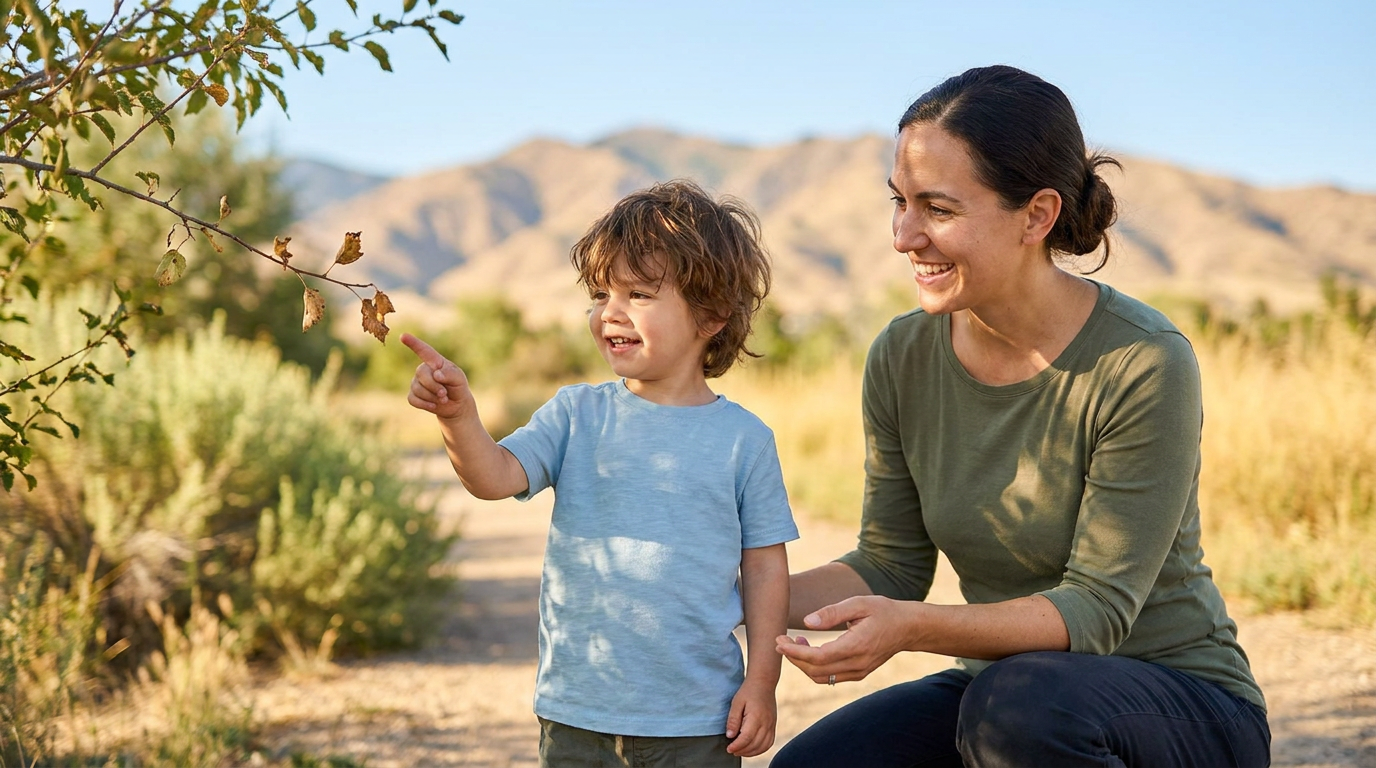
If you’ve been searching for outdoor nature learning ABA Utah ideas that feel realistic for your family, the goal usually is not to turn every hike, park visit, or splash-pad stop into a formal therapy session. It is to find outdoor moments that help your child practice useful skills in real life while still feeling safe, supported, and able to enjoy the experience. For many Utah parents, that means choosing activities that fit their child’s current regulation, communication, and flexibility goals instead of chasing a perfect outing.
Outdoor settings can be helpful because they create natural reasons to ask for help, wait, make choices, recover from frustration, and move through transitions. A neighborhood walk, a snack at the park, or a short nature trail can all become low-pressure opportunities to build carryover from therapy into daily family routines. The key is matching the activity to the goal, the setting, and your child’s capacity that day.
Why Outdoor Settings Can Support ABA Goals in Real Life
Skills learned in structured sessions matter most when children can use them in everyday settings. That is the basic idea behind generalization: a child may learn a skill with one person in one place, but the goal is for that skill to become useful across other routines, environments, and relationships. Outdoor settings help because they naturally create moments for requesting, following directions, waiting, taking turns, shifting plans, and regulating through movement.
For younger children, that might look like asking for “more swing,” pointing to a preferred snack, or walking back to the stroller after a short park visit. For school-age children, it may mean waiting at the slide, tolerating a change in route on a walk, or joining a simple turn-taking game. Outdoor play can also offer movement, sensory input, and everyday communication opportunities, which aligns with broad guidance from organizations such as the CDC and Marcus Autism Center.
That does not mean every outing needs to become work. A relationship-first approach matters here. Families who value connection over compliance may appreciate Possibilities ABA’s Clinical Values, which emphasize assent-aware care and meaningful participation rather than pushing through distress. The aim is not perfect behavior outdoors. The aim is functional practice in real life.
The TRAIL Fit Framework
The TRAIL Fit Framework gives parents a simple way to plan outdoor practice without overcomplicating the outing. It keeps the focus on fit, support, and carryover rather than pressure or performance.
T – Target the real-life skill
Start with one skill, not five. You might choose requesting help, waiting briefly, transitioning away from a preferred activity, following one-step directions, or calming after frustration. When the goal is specific, it becomes easier to notice whether the outing is actually helping.
For a younger child, a realistic goal may be handing you a snack container to open or walking with you to a new play area. For a school-age child, it could be waiting for a turn on the swing or accepting that the family is leaving after two more minutes. Small, observable goals are usually more useful than vague expectations like “do better outside.”
R – Read the setting first
Before you begin, scan the environment. Is it hot? Crowded? Loud? Is there water nearby? How far is the walk from the car to the activity? Are there clear exits, shaded areas, or quieter backup spots?
This step matters in Utah, where outdoor conditions can change how manageable an outing feels. A playground that works well at 9:00 AM may be too hot and overstimulating by midday. A splash pad may sound fun but still be too unpredictable if your child is already tired or if water safety is a concern. Often, success has less to do with the activity idea itself and more to do with whether the setting fits your child’s capacity that day.
A – Adapt the supports
Bring the supports that make participation more likely. That could include a visual schedule, first/then language, a favorite snack, headphones, a comfort item, a short countdown, or a clear plan for breaks. For younger children, shorter outings and simpler routines are usually easier to sustain.
Adaptation also means scaling the activity down. A “nature walk” does not have to be a long hike. It can be ten minutes on a paved path with one simple job, such as finding a leaf, asking for help stepping over a curb, or choosing whether to turn left or right. The goal is regulation and participation, not pushing through overwhelm.
I – Invite practice, not pressure
Outdoor outings work best when the target skill shows up naturally. You might pause before pushing the swing so your child has a reason to request “go.” You might wait together for a turn at the slide and model simple language like “my turn” and “your turn.” You might use a scavenger hunt to practice following directions or shifting attention.
Keep prompts light. If your child is engaged and calm, you may only need a brief cue. If they are getting overloaded, step back. Not every moment needs correction or coaching. Stopping early, simplifying the plan, or choosing connection over repetition is sometimes the best decision you can make.
L – Look for carryover
After the outing, ask a simple question: did the skill show up in a new way, with a new person, or in a different part of the routine? Maybe your child asked for help at the park after usually only doing that at home. Maybe they tolerated leaving the splash pad with less recovery time than last week. Maybe they accepted one small change in plan without shutting down.
That is carryover. It is not mastery. It is information you can use to shape the next outing. Over time, these small wins help families build routines that feel more confident and less chaotic.
Outdoor Activities Mapped to Common ABA Goals
The most useful outdoor ideas are the ones that match a real goal. Instead of asking, “What should we do outside?” it helps to ask, “What skill are we hoping to support today?”
Activities for communication and requesting
Neighborhood walks, snack outings, simple scavenger hunts, and playground choice-making can all create natural communication opportunities. A child might request a preferred path, ask for a push on the swing, choose between two snacks, or signal that they want a break.
Outdoors can help because communication has a clear purpose. The child is not answering a question just to answer it. They are asking for something meaningful in the moment. Parents can support this by pausing briefly, offering two clear choices, or modeling short phrases without demanding perfect speech. If the child becomes overwhelmed, simplify the task and reduce the number of choices.
Activities for waiting, turn-taking, and social play
Playground routines, bean bag toss, follow-the-leader, or a simple ball game at the park can help children practice short wait times and predictable turn structures. For some children, success may be one brief partner moment rather than fully joining group play.
The outdoor setting can help because movement keeps the interaction more natural and less intense than face-to-face social demands. You can coach by narrating what comes next, using visual or verbal countdowns, and keeping turns short. If your child does not want peer interaction that day, it is okay to reduce the social demand and focus on waiting with a trusted adult instead.
Activities for flexibility and transitions
Transitions often show up at the hardest parts of an outing: leaving the car, shifting from one station to another, or ending a preferred activity. Practice can happen during short park visits, picnic setups, trail stops, or the walk back to the car.
First/then language, two-minute warnings, and one last turn can help, but the bigger goal is to make the transition predictable and manageable. If the original plan is too hard, a graceful exit is better than a prolonged struggle. Flexibility grows more easily when a child experiences small, supported changes rather than repeated overwhelm.
Activities for sensory regulation and confidence outdoors
Lower-stimulation parks, short nature walks, splash pads, water play, and movement-based activities can support regulation and confidence when they match the child’s sensory needs. Some children organize better with climbing, swinging, and heavy movement. Others do better in quieter outdoor spaces with fewer social demands.
Utah families often need to think about heat, hydration, sun exposure, and seasonal intensity along with sensory load. A shaded morning outing may work better than an afternoon park visit in the summer. If your family is looking for more ideas on choosing manageable outings, Sensory-Friendly Outings in St. George: How to Choose Family Activities That Feel Manageable offers a helpful companion resource. It is especially useful when you are trying to balance regulation, enjoyment, and realistic expectations.
How to Plan Supports, Safety, and Success for Utah Outings
A good outing usually starts before anyone leaves the house. Think through sensory prep, water and sun needs, clothing, bathroom access, walking distance, and what you will do if the environment feels too big once you arrive. Utah families may also need to plan around fast-changing weather, open water areas, and long stretches of sun exposure. The CDC’s sun safety guidance can be a helpful baseline when you are preparing for hotter outdoor conditions.
It also helps to plan for the stress points parents know well: elopement risk, crowded spaces, sibling needs, leaving a preferred activity, and transition time back to the car. A backup plan can be as simple as identifying a shaded quiet spot, bringing a familiar reinforcer, or deciding in advance that a ten-minute success counts as a good outing.
During the outing, watch for early signs that your child is nearing their limit. That could be increased pacing, refusal, faster speech, shutting down, or escalating body language. When you see those signs, step down the demand. Offer a break, shorten the activity, or end on a calm moment if you can. Protecting trust matters more than squeezing one more trial out of the experience.
If outdoor practice keeps breaking down even with short outings and thoughtful support, more structured guidance may help. Possibilities ABA’s Center-Based ABA Therapy Services explain how clinicians can help families build functional skills, regulation strategies, and carryover plans that are realistic across settings. That kind of support can make outdoor practice feel more doable, not more pressured.
Outdoor ABA Goal Mapper for Utah Families
This planning tool can help you choose an outing that fits today’s goal, today’s regulation level, and today’s support needs. Success does not have to mean a perfect trip. It may mean participation, one clear request, a shorter recovery time, or one smoother transition.
| Activity
|
Skill Target
|
Sensory + Safety Considerations
|
Support Plan
|
What Success Could Look Like
|
| Neighborhood walk
|
Requesting, following directions
|
Traffic, heat, walking tolerance
|
Two choices for route, short distance, water
|
Child chooses a direction or asks for help once
|
| Playground visit
|
Waiting, turn-taking
|
Crowds, noise, climbing risk
|
Visual countdown, short turns, shaded breaks
|
Child waits briefly or leaves one area with support
|
| Splash pad or water play
|
Flexibility, regulation
|
Water safety, wet textures, noise
|
Clear boundaries, towel change plan, one trusted adult close by
|
Child explores briefly or transitions out with less distress
|
| Nature trail or short hike
|
Following directions, confidence
|
Uneven ground, sun, distance
|
Keep it short, choose easy terrain, planned stop points
|
Child stays with the group for part of the walk
|
| Picnic or snack outing
|
Requesting, tolerating transitions
|
Ants, wind, hunger, cleanup demands
|
Familiar foods, first/then language, short ending routine
|
Child requests snack items or helps with cleanup
|
| Scavenger hunt
|
Joint attention, shifting attention
|
Distraction, frustration tolerance
|
Simple list, one item at a time, model what to find
|
Child finds one item and returns attention to the activity
|
| Turn-taking game at the park
|
Social play, waiting
|
Peer unpredictability, noise
|
Keep group small, use simple rules, praise brief participation
|
Child completes one turn or watches calmly before joining
|
| Community event
|
Flexibility, coping with change
|
Crowds, sound, long lines, exits
|
Early arrival, exit plan, headphones, short duration
|
Child tolerates part of the event and recovers with support
|
| Transition back to the car
|
Leaving preferred activities
|
Parking lot safety, fatigue
|
Countdown, first/then plan, preferred item waiting in car
|
Child moves toward the car with fewer reminders
|
| Backup low-stimulation option
|
Regulation, recovery
|
Reduced stimulation but limited novelty
|
Quiet bench, short walk, snack, sensory item
|
Child calms enough to end the outing without escalation
|
Before weekends, school breaks, or family day trips, choose just one row and one goal. That usually works better than trying to practice everything at once. Over time, you can repeat the same outing with slightly less support or in a slightly busier setting when your child seems ready.
FAQ
What are effective outdoor activities for children with autism in Utah?
The most effective activities are the ones that match your child’s goal and current tolerance. For one child, that may be a neighborhood walk with simple choice-making. For another, it may be a short splash-pad visit, a quiet park, or a scavenger hunt on an easy trail. In Utah, it is also important to factor in heat, crowds, walking distance, and water safety before choosing the activity.
How can outdoor play help children practice ABA skills?
Outdoor play gives children real reasons to use skills outside structured sessions. A child may need to request help, wait for a turn, follow a direction, recover from frustration, or transition between activities. When those moments happen naturally and with support, they can strengthen carryover from therapy into everyday life.
What are some sensory-friendly outdoor activities for autistic children?
Lower-stimulation parks, short morning walks, quiet nature paths, backyard water play, picnic outings, and movement-based play with predictable routines can all be sensory-friendly options. If your child starts showing signs of overload, scale down the plan, shorten the outing, or switch to a backup activity instead of pushing through.
How can parents handle transitions or resistance during outdoor outings?
Start by making the transition predictable. Use clear warnings, simple language, and an exit routine your child knows. If your child resists, lower the demand rather than turning it into a power struggle. Sometimes the best choice is leaving earlier, taking a break, or ending with support so the next outing still feels possible.
How do I know if an outdoor activity is the right fit for my child today?
Look at regulation first. If your child is already tired, dysregulated, sick, hungry, or stressed by earlier demands, a smaller and simpler outing is usually a better fit. The right activity is one where participation feels possible with support, not one where everyone spends the outing trying to recover.
Outdoor practice works best when it stays human, flexible, and connected to daily life. For families who want extra support in Southern Utah, Possibilities ABA offers services in St. George, Cedar City, Hurricane Valley, Bloomington Center, and La Verkin. The goal is not to make nature feel like work. It is to help children practice useful skills in places where family life actually happens.