
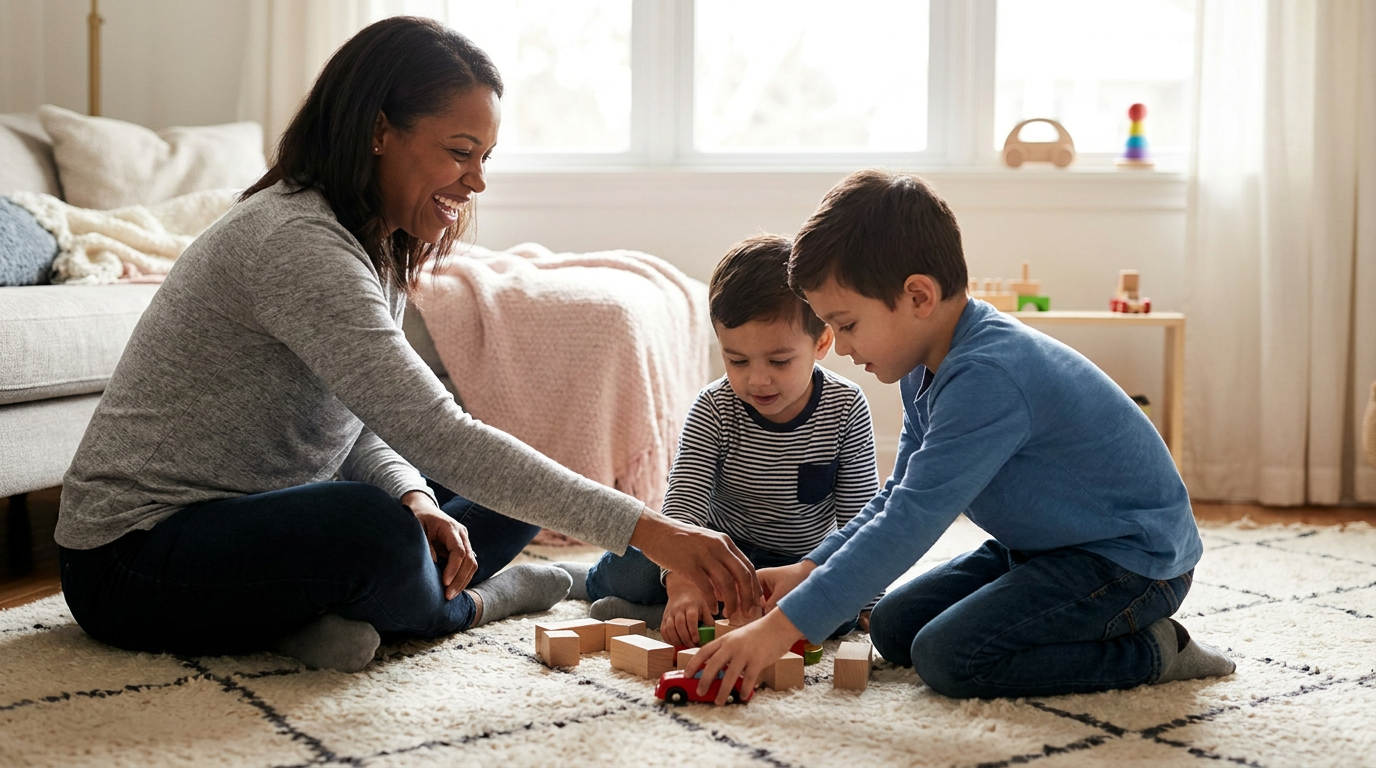
Autism sibling relationships can feel complicated even in loving families. Many parents feel pulled in multiple directions, trying to support one child’s communication, regulation, or sensory needs while also worrying that another child may feel confused, left out, or quietly overwhelmed. If that sounds familiar, this article is meant to help you think more clearly about what to do next.
Sibling strain often shows up in ordinary moments: conflict after a hard school day, jealousy over who gets more parent time, arguments during transitions, or hurt feelings after a public meltdown. That does not mean the sibling bond is broken. It usually means the family needs better support, clearer explanations, and more intentional ways to protect both children’s needs.
This guide takes a whole-family, ABA-informed, relationship-first approach. The goal is not to make siblings responsible for treatment or force closeness. It is to help parents support connection, reduce friction, and create a home where both children feel seen.
Why Sibling Relationships Can Feel Complicated When One Child Has Autism
Sibling dynamics are shaped by more than love alone. They are also shaped by routines, stress, attention, and how predictable daily life feels. When one child needs extra support with transitions, communication, safety, or regulation, the family rhythm can start to revolve around those needs. A sibling may notice that dinners change, outings get cut short, or parents seem emotionally unavailable after difficult days.
That kind of pressure can create misunderstandings. One child may feel constantly interrupted. Another may feel overwhelmed by noise, touch, or unpredictability. Small moments can build up into a pattern of tension if nobody pauses to explain what is happening or repair the relationship afterward.
It helps to remember that stress inside the household is not the same thing as permanent damage between siblings. In many families, the issue is not that the children cannot have a strong relationship. It is that the family needs more structure, more repair, and more support around hard moments.
If family stress is leaving you depleted, it may help to read more about support for exhausted caregivers. When parents have more support, it often becomes easier to protect sibling relationships too.
Common Emotions and Pressure Points Siblings May Experience
Siblings can feel love and frustration at the same time. They may feel protective of their autistic brother or sister and still feel jealous about unequal attention. They may feel proud, embarrassed, confused, sad, irritated, or guilty for having any of those reactions. Mixed feelings are common, and children usually do better when those feelings can be named without shame.
Some signs that a sibling may be struggling include withdrawal, frequent arguments, acting much younger than expected, trying too hard to keep the peace, taking on too much caregiving, or avoiding parts of family life that feel stressful. These reactions do not mean a child is selfish or uncaring. They often signal that the child needs more support, more clarity, or more protected time with a parent.
Age matters here. Younger siblings often need simple explanations, routine-based reassurance, and help putting feelings into words. School-age children may focus on fairness, notice social differences more clearly, and need help responding when friends or relatives ask questions. Tweens and teens may carry more complex feelings, including protectiveness, embarrassment, resentment, or worry about future responsibilities.
A healthy approach does not treat the sibling as the “easy child.” It makes room for honest emotions and recognizes that both children may need support in different ways.
The BOTH Children Lens
One practical way to think through hard moments is to use the BOTH Children Lens. This is not a rigid formula. It is a way to pause and ask what each child needs, what the relationship needs, and what the family can realistically sustain.
B – Balance attention intentionally
Perfect fairness is not realistic, but visible care for each child is. Short, predictable rituals often matter more than occasional big gestures.
- Read one book together before bed.
- Take a ten-minute walk with one child after dinner.
- Let an older sibling choose a weekly coffee run or errand with a parent.
- Protect a small routine that belongs to each child and happens consistently.
Younger siblings may respond best to brief repeated rituals. Older children may prefer planned check-ins, conversation during a drive, or dedicated time where they get some choice and privacy.
O – Observe what each child is communicating
Conflict is often information. A sibling who snaps quickly may be signaling jealousy, confusion, or sensory overload. An autistic child who pushes away play may be showing fatigue, communication difficulty, or a need for more space. Looking at behavior as communication helps parents respond with more clarity and less blame.
That does not mean every behavior should be ignored. Safety still matters. But it does mean the first question is often, “What is this moment telling me?” rather than, “Who is being difficult?”
T – Translate autism in sibling-safe language
Children need honest explanations that fit their age. Clear language lowers fear and confusion, but it should never turn a sibling into the person responsible for managing the situation.
You might say, “Your brother’s brain processes noise differently, so crowded places can feel much harder for him,” or, “Your sister is not trying to ignore you. Talking when she is upset can be harder for her in that moment.” The goal is understanding without shame, blame, or comparisons about who is more “normal.”
H – Hold separate needs and shared moments
Strong sibling relationships do not require children to do everything together. Sometimes the healthiest approach is to protect separate decompression time and create low-pressure opportunities for connection.
That might mean parallel play in the same room, a short board game with adult support, or a shared snack routine after school. Progress should protect wellbeing and relationships, not just visible cooperation. That same idea is part of meaningful therapy goals that center happiness and quality of life.
ABA-Informed Strategies for More Positive Shared Moments at Home
ABA-informed support can be practical and compassionate. The focus is not on controlling siblings or turning home into therapy. It is on using predictable tools that make family life calmer and more workable.
Model and reinforce the interactions you want to see
Children learn a lot from what parents notice. When you see a sibling wait, repair after an argument, offer a toy, use calm words, or respect a boundary, name it specifically: “You gave him space when he needed it,” or “You both came back and tried again.” Specific praise helps children understand which actions support connection.
Use routines, visual supports, and predictable transitions to lower conflict
Many sibling conflicts happen around uncertainty. A visual schedule, a short countdown, or first/then language can make routines feel clearer and less personal. Younger children may benefit from pictures or simple sequence boards. Older children may do better with collaborative planning: “After school is quiet time first, then snack, then you two can choose between drawing or a quick game.”
Coach shared play and interaction without forcing it
Some siblings connect best in short, structured moments rather than long open-ended play.
- Offer two simple activity choices.
- Keep the interaction brief enough that both children can end successfully.
- Support turn-taking or parallel play without demanding eye contact or nonstop engagement.
- Step in early if one child is getting overloaded.
Siblings are not junior therapists. They should never be responsible for another child’s treatment goals or emotional regulation.
Build repair into the routine after hard moments
After conflict, meltdown, or a rough day, regulate first and talk later. Once everyone is calmer, validate both children’s experience and offer a path back to connection. You might say, “That was a hard moment for both of you,” or, “You were both overwhelmed. Let’s figure out what would help next time.”
If you are looking for a values-based explanation of why this approach prioritizes connection over compliance, compassionate ABA therapy can provide that context.
How to Explain Autism to Siblings in Age-Appropriate Language
For younger siblings
Use simple, concrete language. “Your brother’s body needs more help staying calm,” or, “Your sister may play differently, but she still likes being near you sometimes.” Reassure young children about what is and is not their job: “You are not in charge of fixing this. Grown-ups will help.” Repeat the explanation over time instead of treating it like one important talk.
For school-age siblings
School-age children usually ask more “why” questions and compare fairness closely. It helps to explain the difference between fairness and sameness: “You do not always need the exact same thing to both be cared for well.” Give them simple scripts for social situations, such as, “My brother communicates differently,” and make it clear they can bring questions to you privately.
For tweens and teens
Older siblings often need more nuanced conversations about privacy, responsibility, embarrassment, and future worries. They may need to hear that being loving does not mean becoming a co-parent. Validate the complexity: “You can care about your sibling and still need space,” or, “It makes sense to have mixed feelings about this.” Protecting teens from too much emotional labor is part of protecting the family system.
Sibling Support Planning Checklist
This section can also work well as a downloadable one-page family tool.
Checklist skeleton
- Sibling emotional check-in: What feels heavy, confusing, or upsetting for the sibling right now? What emotions are showing up most often?
- Autism explanation plan: What language fits the sibling’s age today? What reassurance needs to be repeated?
- Household pressure points: Which routines, transitions, or public situations lead to the most stress, jealousy, or conflict?
- Shared-moment planning: What low-pressure activity gives both children the best chance of success? How will you support it without forcing it?
- Conflict-repair plan: What phrases will you use after hard moments? How will each child be helped to recover?
- One-on-one attention plan: What small predictable ritual belongs to each child?
- Boundary setting: What is the sibling not responsible for? Which helping roles, if any, are optional and age-appropriate?
- Escalation and support signals: What signs suggest the sibling needs more help? What questions should be raised with therapists, teachers, or caregivers?
Revisit this checklist after difficult weeks, schedule changes, or any period when family stress starts to build.
When the Family May Need More Support
Sometimes the next step is more than adjusting routines at home. If a sibling seems chronically distressed, withdrawn, resentful, exhausted, or affected at school, added support may be appropriate. The same is true when conflict feels unsafe, when family members are staying in survival mode for long stretches, or when a recent diagnosis has changed the whole household.
Support can include talking with your child’s therapy team, checking in with teachers, asking your pediatric provider for guidance, joining a sibling support group, or considering family counseling. Outside support is not a sign that your family has failed. It is often the most practical way to protect everyone before stress gets deeper.
If your family is still adjusting to a recent diagnosis, what to do next after an autism diagnosis may help you think through the broader transition.
FAQ
How does autism affect sibling relationships?
Autism can shape sibling relationships by changing routines, attention, communication patterns, and stress levels at home. That does not mean the relationship will always be strained. With support, repair, and clearer family systems, many sibling relationships become more stable and connected over time.
How can parents support neurotypical siblings when one child has autism?
Support usually includes validating the sibling’s feelings, giving honest explanations, protecting one-on-one time, using predictable routines, and setting clear boundaries around what the sibling is not responsible for.
What feelings are common for siblings of autistic children?
Love, pride, confusion, jealousy, frustration, protectiveness, sadness, and guilt can all be common. When those feelings become persistent distress, withdrawal, or resentment, the sibling may need more support.
How do you explain autism to siblings in an age-appropriate way?
Use simple, honest language that fits the child’s developmental level, and repeat the explanation over time. The goal is understanding, not making the sibling feel in charge of the situation.
Can ABA strategies improve sibling relationships at home?
They can help when used in a practical, compassionate way. Modeling, reinforcement, routines, visual supports, and coached interaction can reduce friction and support calmer, more positive shared moments.
Should siblings be involved in ABA therapy sessions?
Sometimes limited involvement can be helpful if it is low-pressure, clearly guided, and respectful of the sibling’s boundaries. Siblings should never feel responsible for another child’s progress.
When should families consider sibling support groups or counseling?
Consider added support when a sibling shows chronic distress, withdrawal, school problems, intense resentment, or ongoing strain that does not improve with home adjustments.
Possibilities ABA’s relationship-first approach is a helpful reminder that supporting sibling relationships is not about making children perform connection. It is about creating enough clarity, safety, and support for connection to grow more naturally over time.